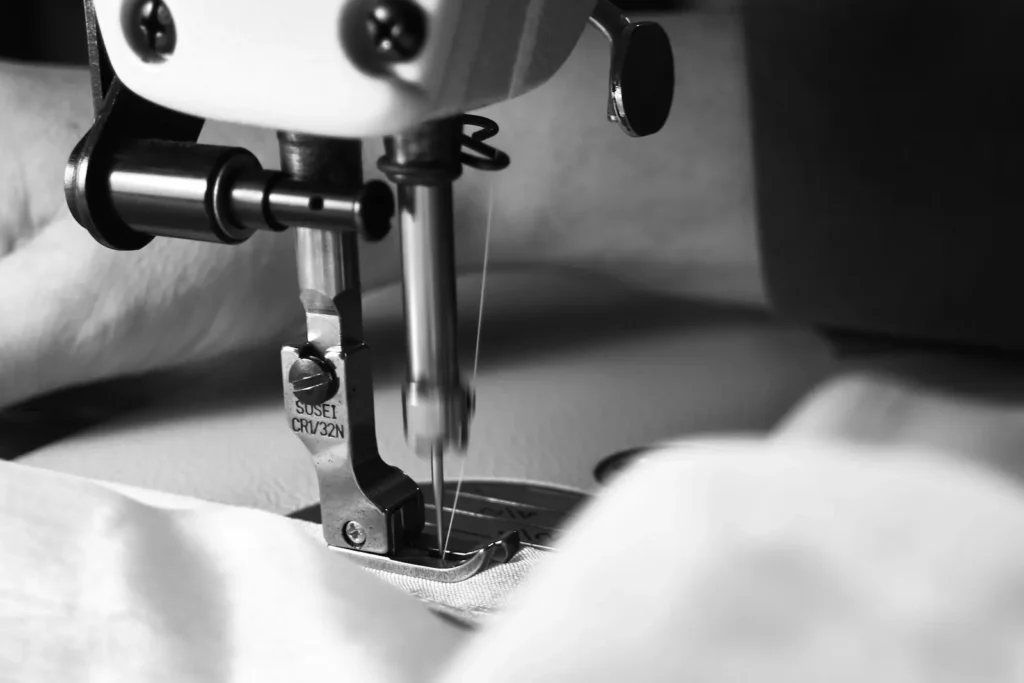
What flatlock is
A flatlock seam joins two fabric edges side by side (butted, not overlapped) and covers the joint with interlocking stitches on both faces. The result is a seam that's nearly flat, stretches with the fabric and has no bulky inner ridge.
The standard for performance wear is 4-needle 6-thread flatlock, which gives a wide, strong, decorative seam.
Why it matters for fightwear
- No chafing: nothing raised rubs against skin during grappling.
- Stretch: the seam stretches as much as the fabric.
- Durability: multiple needles spread load across the seam.
- Looks finished: the visible stitch reads as quality on product pages.
Flatlock vs overlock
| Flatlock | Overlock + coverstitch |
|---|
| Comfort | Best, flat both sides | Small ridge inside |
| Stretch | Excellent | Good |
| Cost | Higher | Lower |
| Best for | Rash guards, compression | Tees, casual wear |
Specify it
"All body and sleeve seams 4-needle 6-thread flatlock, thread color matched to panel, SPI 12–14." See how to create a tech pack.